Showing posts with label spirit. Show all posts

Tuesday, June 19, 2012

Self Mastery


RUSSELL M. NELSON
Of the Quorum of the Twelve Apostles
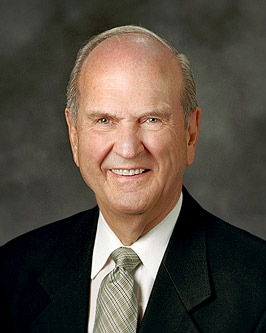
If our faith be united in prayer that we may be edified together, I should like to speak about our quest for self-mastery. In so doing, I would converse as a loving father counseling one of my own children.

Before you can master yourself, my precious one, you need to know who you are. You consist of two parts—your physical body, and your spirit which lives within your body. You may have heard the expression “mind over matter.” That’s what I would like to talk about—but phrase it a little differently: “spirit over body.” That is self-mastery.

When you arrived as a newborn baby, your little body was master. You had what I call the “I-want-what-I-want-when-I-want-it” philosophy. No amount of discussion could postpone your impatient demands when you wanted to be fed—and now! Like all parents, we anxiously anticipated the first smile, a word, a glimpse at the potential of the spirit within your tiny body. Is there a mother who has not cradled her baby as your sweet mother did, in wistful wonder of the destiny of her dear little one? Even Mary, the mother of Jesus, might have asked such questions:

Baby, lyin’ in a manger, slumberin’ so sweetly,
What you goin’ to be?
Baby, all the world is watchin’, all the world awaits to see.
What will you be?
Baby, sleepin’ in a stable, underneath the heaven,
What you goin’ to say? …
Baby, lyin’ in a manger,
Will you save the world one day?
Through those early years, we parents are properly concerned with physical needs of our children, such as food, clothing, and shelter.

But as you grow older, our concerns shift more toward your spiritual growth, in order that you might achieve your full potential. “For the natural man is an enemy to God, and has been from the fall of Adam, and will be, forever and ever, unless he yields to the enticings of the Holy Spirit … and becometh a saint.” (Mosiah 3:19.)

That requires self-mastery. Remember, “The spirit and the body are the soul of man” (D&C 88:15.) Both are of great importance. Your physical body is a magnificent creation of God. It is his temple as well as yours, and must be treated with reverence. Scripture declares: “Ye are the temple of God. … If any man defile [it], him shall God destroy; for the temple of God is holy, which temple ye are.” (1 Cor. 3:16–17.)

Remarkable as your body is, its prime purpose is even of greater importance—to serve as tenement for your spirit. Abraham taught that “these … spirits … existed before, they shall have no end … for they are … eternal.” (Abr. 3:18.)

Your spirit acquired a body at birth and became a soul to live in mortality through periods of trial and testing. Part of each test is to determine if your body can become mastered by the spirit that dwells within it.

Although your spirit had a veil of forgetfulness placed over it at the time of your birth into mortality, it retained its power to remember all that happens—precisely recording each event of life. Indeed, scriptures warn “that every idle word that men shall speak, they shall give account thereof in the day of judgment.” (Matt. 12:36.) Prophets refer to our “bright recollection” (Alma 11:43) and “perfect remembrance” (Alma 5:18) at that day of decision.

Since thoughts precede deeds, you must first learn to control your thoughts. “As [a man] thinketh in his heart, so is he.” (Prov. 23:7.)

In your quest for self-mastery, full participation in the activities of the Church will help. I’ll mention but a few. A first step comes as we learn together to keep the Sabbath day holy. This is one of the Ten Commandments. (See Ex. 20:8; Deut. 5:15.) We honor the Sabbath “to pay [our] devotions unto the Most High” (D&C 59:10), and because the Lord declared: “It is a sign between me and you … that ye may know that I am the Lord that doth sanctify you.” (Ex. 31:13; see also Ezek. 20:20.)

Another step toward self-mastery comes when you are old enough to observe the law of the fast. As funds are contributed from meals missed, the needs of the poor may be met. But meanwhile, through your spirit, you develop personal power over your body’s drives of hunger and thirst. Fasting gives you confidence to know that your spirit can master appetite.

Some time ago your mother and I visited a third-world country where sanitary conditions were much poorer than ours. We joined with a delegation of other doctors from all over the world. The president of our group, an experienced traveler, warned of risks. In order to avoid water that might be contaminated, we were even counseled to brush our teeth with an alcoholic beverage. We chose not to follow that counsel, but simply did what we had learned to do once a month. We fasted that first day, thinking we could introduce simple food and fluids gradually thereafter. Later, we were the only ones in our group without disabling illness.

Fasting fortifies discipline over appetite and helps to protect against later uncontrolled cravings and gnawing habits.

Another step toward self-mastery comes from obedience to the Word of Wisdom. Remember, it contains a “promise, adapted to the capacity of … the weakest of all saints.” (D&C 89:3.) It was given “in consequence of evils and designs which do and will exist in the hearts of conspiring men in the last days.” (D&C 89:4.) Indeed, as you develop courage to say no to alcohol, tobacco, and other stimulants, you gain additional strength. You can then refuse conspiring men—those seditious solicitors of harmful substances or smut. You can reject their evil enticements to your body.

If you yield to anything that can addict, and thus defy the Word of Wisdom, your spirit surrenders to the body. The flesh then enslaves the spirit. This is contrary to the purpose of your mortal existence. And in the process of such addiction, your life span is likely to be shortened, thereby reducing the time available for repentance by which your spirit might attain self-mastery over your body.

Other physical appeals come during your courtship period. In your youth, you may be challenged by restraints of parents hoping to guide you through this wonderful period of life.

Because the adversary is keenly aware of the power of physical temptation, Alma instructed his son and all of us: “See that ye bridle all your passions.” (Alma 38:12.)

When you marry, you and your eternal companion may then invoke the power of procreation, that you may have joy and rejoicing in your posterity. This divine endowment is guarded by your Creator’s law of chastity. All through the years, remember: chastity is the powerful protector of virile manhood and the crown of beautiful womanhood.

In courtship and marriage, virtue seems to come under attack first. Mental turmoil that trails in the wake of weakness from lust has evoked many a tear from innocent loved ones. Without repentance, tumult within self does not quit either.

Shakespeare expressed such self-conflict as one of his characters contemplating conquest in lust spoke these lines:

What win I, if I gain the thing I seek?
A dream, a breath, a froth of fleeting joy.
Who buys a minute’s mirth to wail a week?
Or sells eternity to get a toy?
For one sweet grape who will the vine destroy?
Prophets have repeatedly cautioned about moral sin. One, for example, warned: “O, my beloved brethren, remember the awfulness in transgressing against that Holy God, and also the awfulness of yielding to the enticings of that cunning one. Remember, to be carnally-minded is death, and to be spiritually-minded is life eternal.” (2 Ne. 9:39; see also Rom. 8:6; Alma 36:4; D&C 29:35; D&C 67:10.)

Now don’t misunderstand me. I would not want you to neglect your body. It deserves daily care. Physical conditioning through regular exercise requires self-mastery too. I marvel at Elder Joseph Anderson, now in his ninety-sixth year. For decades, the strength of his spirit over his body has induced him to swim regularly. But his motivation has never been to attain physical longevity. That has come only incidentally. His desire has been to serve God and His anointed. Elder Anderson has followed what I label as the Lord’s prescription for a long and useful life. Those faithful in “magnifying their calling, are sanctified by the Spirit unto the renewing of their bodies. They become … the elect of God.” (D&C 84:33–34.)

Elder Anderson’s exercise program agrees with the perspective of Paul, who said: “Bodily exercise profiteth little: but godliness is profitable unto all things, having promise of the life that now is, and of that which is to come.” (1 Tim. 4:8.)

Handsome and fit, Elder Anderson personifies this scripture: “Glorify God in your body, and in your spirit, which are God’s.” (1 Cor. 6:20.)

As you work during the productive years of life, whether at home or in the field, in the factory or at a workbench, reputation is built and character is forged as you develop self-mastery. Faithful payment of tithing is part of that process. It defends you against dishonesty or shabby temptations. Courageous accountability for your own actions becomes a cherished prize.

It really matters what you listen to, what you look at, what you think, say, and do. Select music that will strengthen your spirit. Control your speech; keep it free from profanity and vulgarity. Follow the teachings of this proverb: “My mouth shall speak truth; and wickedness is an abomination to my lips.

“All the words of my mouth are in righteousness; there is nothing … perverse in them.” (Prov. 8:7–8.)

As you approach old age, you will face new challenges to self-mastery. Symptoms of the deteriorating body can be painful, even disabling. Deep aches of sadness are caused by the departing of loved ones. For some, these deepening trials come early in life. But when yours are thrust upon you, remember a concept expressed by my father some time after my mother had passed away. Your grandparents had been married for sixty-four years. When someone asked how he was doing, my father simply stated, “I’m lonely, but I’m not lonesome.” Do you know what he meant? Though he was now without his sweetheart, he was so busy assisting family and friends, he had replaced sorrow with service and had displaced self-pity with selfless love. He had found joy in following the timeless example of the Master.

Jesus, our Savior, was born in the lowliest of circumstances. For his baptism he was immersed in the lowest body of fresh water upon the planet. In service and suffering, he also “descended below” all things (D&C 122:8), that he could rise above all things. Near the end of his life, he triumphantly declared, “I have overcome the world.” (John 16:33.) “Look unto me, and endure to the end, and ye shall live; for unto him that endureth to the end will I give eternal life.” (3 Ne. 15:9.) Scriptures tutor us at least twenty-six times * to endure to the end to attain eternal life. Then we will obtain a resurrected body—one that is incorruptible, glorified, and prepared to live in the presence of God.

To reach your highest destiny, emulate the Savior. He proclaimed, “What manner of men ought ye to be? … Even as I am.” (3 Ne. 27:27.) Our loftiest hope is to grow in spirit and attain “the stature of the fulness of Christ: That we henceforth be no more children.” (Eph. 4:13–14.)

You will then be well prepared for that pending day of judgment when, as taught by President Spencer W. Kimball, “the soul, composed of the resurrected body and the eternal spirit, … will come before the great judge to receive its final assignment for the eternity” (The Teachings of Spencer W. Kimball, ed. Edward L. Kimball, Salt Lake City: Bookcraft, 1982, p. 46.)

Remember, my dear one, not an age in life passes without temptation, trial, or torment experienced through your physical body. But as you prayerfully develop self-mastery, desires of the flesh may be subdued. And when that has been achieved, you may have the strength to submit to your Heavenly Father, as did Jesus, who said, “Not my will, but thine, be done.” (Luke 22:42.)

When deepening trials come your way, remember this glorious promise of the Savior: “To him that overcometh will I grant to sit with me in my throne, even as I also overcame, and am set down with my Father in his throne.” (Rev. 3:21.)

Christ is our great Exemplar. I declare, as a special witness, that he is the Son of God and “is the life and the light of the world.” (Alma 38:9; see also D&C 11:28.) We develop self-mastery as we become like him, I testify in the name of Jesus Christ, amen.

Tuesday, May 1, 2012

A Conversation on Spouse Abuse

A Conversation on Spouse Abuse


Church leaders have consistently spoken out against spouse abuse. For example, in an October 1998 general conference address President Gordon B. Hinckley said:
“We condemn most strongly abusive behavior in any form. We denounce the physical, sexual, verbal, or emotional abuse of one’s spouse or children. …
No man who abuses his wife or children is worthy to hold the priesthood of God. No man who abuses his wife or children is worthy to be a member in good standing in this Church. The abuse of one’s spouse and children is a most serious offense before God, and any who indulge in it may expect to be disciplined by the Church” (“What Are People Asking about Us?” Ensign, Nov. 1998, 72).
The proclamation on the family also contains a forceful condemnation of abuse: “We warn that individuals who violate covenants of chastity, who abuse spouse or offspring, or who fail to fulfill family responsibilities will one day stand accountable before God” (“The Family: A Proclamation to the World,” Ensign, Nov. 1995, 102).
Ensign staff members recently spoke with several Latter-day Saint professionals about this issue. John C. Nelson, M.D., an obstetrician-gynecologist, is on the board of the American Medical Association and is the spokesperson for the AMA Alliance SAVE (Stop America’s Violence Everywhere) program. He is a member of Salt Lake City’s Monument Park Second Ward, Monument Park North Stake. Anne L. Horton is an associate professor of social work at Brigham Young University and is a licensed clinical social worker whose practice focuses on domestic abuse. She is a member of the Ensign Third Ward, Salt Lake Ensign Stake. Brent H. Bartholomew is an attorney experienced in representing abused spouses and children. He is a member of the Lakeridge 12th Ward, Orem Utah Lakeridge North Stake.

Defining Spouse Abuse

Ensign: Some think spouse abuse includes only acts of a physical nature. Thus, how should the term be defined?
Anne Horton: Many experts define spouse abuse as the maltreatment of another in an attempt to control him or her. Spouse abuse may be physical, emotional, verbal, or sexual. This type of abuse behavior between parents sets the tone for the rest of the family. It has severe ramifications on children as well as spouses because it traumatizes the children and may lead them to imitate that behavior later on.
John Nelson: Spouse abuse involves inappropriate acts of one spouse over the other. It may involve coercive acts in which an abuser forces a person to do something that he or she normally would not do, with no particular concern for the victim. Abuse may also include the use of threats, name calling, yelling, and intimidation.
I believe that there are people, women particularly, who are abuse victims but wouldn’t describe themselves as such. They can’t go out of their homes, they have to be back at nine o’clock, they can’t go to lunch on Tuesday because they didn’t get permission from their husbands, and so on. It may not necessarily involve being beaten up, but it is still abuse and is outside the bounds the Lord has set for marriage.
Brent Bartholomew: Spouse abuse is behavior that is destructive to the body, mind, or spirit. In fact, long after any possible physical injuries heal, the emotional scars of abuse may still persist.
Ensign: What are some signs of spouse abuse that are not as obvious as bruises or other physical marks?
Anne Horton: There are usually many signs of abuse rather than a single isolated sign. One may be when an individual shows fear at times when this would not be expected. For instance, a person may be afraid to speak without the spouse’s permission. Abuse victims may be isolated a lot; they may not be allowed to take part in community activities, and the people they see and how their time is spent may be closely monitored by the spouse. Those are some indicators we worry about. However, we do not want people to see abuse where none exists.
Brent Bartholomew: It’s important that we don’t encourage witch hunts against others in any way because abuse is not a part of the vast majority of marriage relationships. But when abuse does occur, the problem needs to be addressed constructively.
John Nelson: One possible sign of spouse abuse is an abrupt change in behavior. For example, a person who is typically outgoing and happy suddenly becomes withdrawn. The combination of warning signs sometimes clarifies the picture.
Ensign: What are some reasons abuse occurs?
Brent Bartholomew: Abuse may be part of a learned behavior pattern. In some cases there may be a biochemical imbalance or medical problem that contributes to a person’s abusive behavior. In other cases the abuser may be involved with drugs or alcohol. There is no single reason why abuse occurs; many factors can contribute to abusive behavior, and abusers can come from a wide variety of backgrounds.
John Nelson: Ultimately the abuser is responsible for his or her behavior. It is not the alcohol, for example, that makes people abusive. They are abusive first, and the alcohol may be a facilitator.
In some cases abusers misunderstand or misapply the concept of leadership in the home. I want to make it very clear that it’s not the concept of a presiding leader in the home that is wrong; it’s the misapplication of it. The 121st section of the Doctrine and Covenants speaks of that specifically: “The rights of the priesthood are inseparably connected with the powers of heaven, … but when we … exercise control or dominion or compulsion … in any degree of unrighteousness, behold, the heavens withdraw themselves” (D&C 121:36–37).

Changing Abusive Behavior

Ensign: How likely is it that abusers will change?
Brent Bartholomew: If they genuinely want to change and if they seek appropriate help and put forth the required effort, they can be successful. No one should say, “Well, this is just the way I am.” It may take action by a Church disciplinary council because disciplinary councils are set up to help people repent and change. Through sincere, sustained effort on their part and by the Savior’s atoning power, they can receive a mighty change of heart, repent, and be forgiven.
Anne Horton: Change is possible, but it isn’t easy, and it doesn’t take place over just a few counseling sessions or progressive steps. It takes time and commitment. Abusers need to know their behavior is a choice. Every time they hit someone, every time they slam a door in someone’s face, they’ve made a choice to do that and they need to take responsibility for their actions.
Of the many resources we have for dealing with the problem of abuse, the greatest resources are gospel teachings and our Church leaders, with their commitment to help us strengthen our families.

How Church Leaders Can Help

Ensign: What kind of help can abuse victims receive from Church leaders?
John Nelson: If things are going on that ought not to be, members have the right to go to their local ecclesiastical leaders for help. Bishops or branch presidents, who are encouraged to conduct a private interview with the injured spouse, have the right to receive revelation regarding the abusive situation. There are times when bishops may not know how to deal with the problem. In those cases bishops most likely would seek professional guidance, possibly from LDS Family Services. Instructions on dealing with abuse are found in The Church Handbook of Instructions, which is available to local leaders. There are many avenues. It is not incumbent upon bishops to be trained counselors to provide help.
Brent Bartholomew: I think most bishops realize their own limitations. They can give spiritual guidance and spiritual help, but additional assistance may be required. In some severe cases victims may need to be temporarily outside of the home, so they may need short-term housing and assistance in that respect. They may need counseling that is more intensive and more frequent than the bishop can provide. In severe cases where physical abuse is involved, they may need legal help to get a protective order. A bishop can let them know where to go for the type of help they need. People who are being victimized by abuse should not wait until the problem becomes dangerous before seeking assistance.
John Nelson: We need to understand that the Lord has called the bishop to be the steward over the members of his ward. I know the Lord can bless those leaders with the inspiration they need.
Anne Horton: The Church produces spiritually directed resources that bishops can share with people who may need them, for example, Preventing and Responding to Spouse Abuse (pamphlet, 1997). The bishop can put individuals in contact with therapists who have been identified as being responsible and trustworthy. If these individuals cannot afford to pay the entire cost of counseling, the bishop can help arrange for financial assistance.
John Nelson: If people are not comfortable going to their bishops at first, they may consider talking to their physician or some other health professional they know.

Becoming Informed

Ensign: Initially some victims may want to obtain information anonymously. Where can they go for this information?
Anne Horton: In addition to the Church pamphlet Preventing and Responding to Spouse Abuse, much useful information is available in bookstores and libraries, though people should be selective in choosing materials that are in harmony with Church policies and practices. Many towns have crisis centers for women and children where victims can call or walk in and speak with counselors who may provide them with literature or other resources. Victims don’t have to sign their names or be photographed; confidentiality is closely observed. Other resources are the local police department and the department of human services, both of which should be listed in the local telephone book. They can provide helpful telephone numbers to call. And usually the front section of the phone book will list community services that are offered. One may want to approach LDS Family Services for information and direction in areas where this is available, although this is generally done with a bishop’s referral.
Information is usually more readily accessible than most people think.
Ensign: When someone believes that a family member or friend is in an abusive situation, how can they appropriately help that person?
John Nelson: One of the most important things a person can do to help an abuse victim is to listen. When we offer counsel for problems we do not fully understand, we may only exacerbate the problem. But when we listen, the very fact that someone is acknowledging that what is going on is wrong may be the first step in the victim’s realizing that the abuse must be stopped. We need to listen carefully, we need to listen nonjudgmentally.
Brent Bartholomew: If you have strong evidence that someone you know is experiencing spouse abuse, you might say to the person, “It sounds like there might be a problem; may I help?” That’s a direct approach. You might offer to take your friend to see the bishop. It might not be so intimidating for your friend to talk with him about the problem if there is somebody supportive to help. If it’s someone you don’t know well, or if you feel it may be dangerous for you to get involved, you can say to your ecclesiastical leader, “Next door here’s what I’ve observed; they seem to need some help.” Staying silent only makes the problem worse. However, it is absolutely crucial that it be done in a confidential manner.

The Seriousness of Abuse

Ensign: Leaving the home may seem like a drastic step for someone deeply committed to a marriage. What would make this action necessary?
Anne Horton: Safety issues—especially when physical or sexual abuse is occurring—always come first in a crisis. After people are safe, other relationship issues can be addressed.
Brent Bartholomew: The marriage may still be workable, but sometimes there needs to be a separation so that the abuse can stop and the healing process can start. During this time, a couple may seek counseling to learn how to deal with problems effectively without resorting to abuse. But both parties must be committed to the change; otherwise, change is almost impossible.
In severe cases, counseling for both spouses may not be effective and may even increase the risk of further abuse. In such cases the most effective treatment may be court-ordered domestic violence counseling for the perpetrator.
John Nelson: The American College of Obstetricians and Gynecologists in Washington, D.C., recommends specifically what they call an exit or a safety plan for people in physical danger. The safety plan is, if you cannot prevent being physically attacked, have in mind a place to go that is available day or night, rain or shine. You need to think about the details. You’ve got to have money, car keys, identification, prescription medication, clothing for the children, soap, a person who can receive you day or night or a key to get in, and a way to get there. A crisis shelter may be your best option because most have police protection. That’s a last resort, but that’s the kind of information that might make it possible to diffuse the situation, at least for the short term.
Ensign: Is false reporting of abuse a valid issue?
Brent Bartholomew: False reporting may occur on occasion, but a report of abuse should always be taken seriously.
Anne Horton: Even if abuse hasn’t occurred, a problem of some kind exists when someone would make that accusation, and the problem needs to be addressed.
John Nelson: If people say they’re being abused, believe them.

Healing through the Gospel

Ensign: How can the gospel help those dealing with abuse?
Brent Bartholomew: The Savior’s Atonement encompasses all suffering, not only suffering for our sins but also suffering as a consequence of others’ sins. The pain of those who have been abused can be eliminated through the sanctifying power of the Atonement and the pure and perfect love of Christ. Sometimes this healing process occurs more slowly when a woman has difficulty developing a relationship with our Heavenly Father due to the inappropriate manner in which she has been treated by male figures in her life. But through divine help, she can eventually be healed from the consequences of her spouse’s sins of abuse.
Now, I’ve used the term woman here because abused women are most at risk for serious injury or death. But men can also be abused by their wives. Such abuse is serious and can have lasting, damaging consequences.
Ensign: How can marriage partners exercise the forgiveness the gospel requires and yet avoid falling into the repeating cycle of abuse?
Anne Horton: Just as repentance is a process, so is forgiveness. Unfortunately many people think that forgiving equals forgetting and, therefore, are afraid forgiveness makes them vulnerable. But while the Lord commands us to forgive, He doesn’t tell us to forget any lessons we have learned or demand that we trust an abuser. We can forgive someone without putting ourselves in the position to be victimized again. Love can be achieved and so can forgiveness, but we still must protect ourselves.
Brent Bartholomew: It is very important to learn to forgive, but an abused spouse shouldn’t feel she has to return to a relationship with someone who is unwilling to repent of destructive behavior. When victims who have removed themselves from abusive situations forgive their abusers, it may not mean much to the abusers themselves. But it can mean a great deal to the people who have been abused. In some cases, the anger they feel is more destructive than the abuse they suffer. People need to overcome that anger and feel the Savior’s atoning sacrifice and power in their lives. It can be a difficult process, but it allows spouses who have experienced abuse in the past to move forward.
John Nelson: We need to make it very clear that victims do not need to ask for forgiveness for something they haven’t done. No one deserves to be a victim of abuse.

Preventing the Problem

Ensign: What can be done to prevent abuse?
Brent Bartholomew: In a general sense, youth as well as adults need to be taught correct principles on which to base their relationships with others, and they need positive role models to emulate. Caring priesthood and auxiliary leaders can help in this process.
If a couple is worthily married in the temple after becoming best friends over time, that greatly increases their chances for a marriage that is free from abuse.
It is important to learn to effectively communicate and problem-solve with your spouse because most abusers do not know how to solve problems. It is never acceptable to hit, belittle, or otherwise try to control a spouse in an attempt to solve a problem.
John Nelson: When two people are dating, they should watch carefully how the potential marriage partner reacts to children, other family members, pets, frustrations, and so forth. These actions often reflect the way a person will treat the spouse or other family members.
Brent Bartholomew: Here is another clue: a potential marriage partner who suggests that standards of personal worthiness be set aside in the name of love should be shunned. Abuse is a selfish act. People who invite someone they profess to love to participate in spiritually destructive behavior are acting out of selfishness, not love. Furthermore, those who currently have problems stemming from substance abuse, sexual immorality, pornography, or rage are much more likely to become abusive because they lack self-control.
John Nelson: I think we all ought to celebrate the good marriages we see. I know that not every aspect of these relationships is perfect, but we can learn a great deal from many around us who have successfully made gospel teachings a foundation for their marriages.